

We’d love to hear from you — whether you have a project in mind, or just want to say hi.
hello@komostudio.co.uk

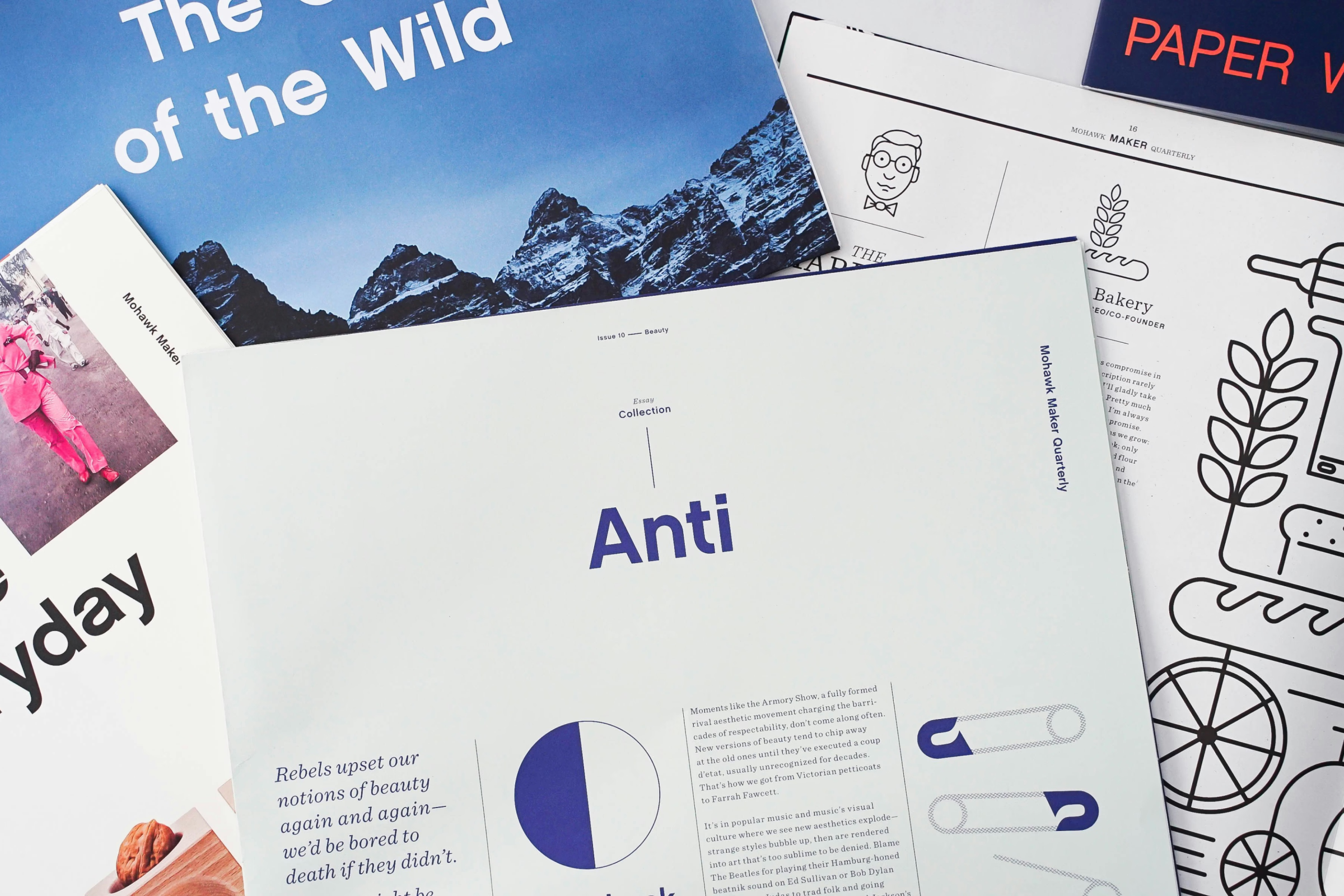
Trust is one of the most valuable things a business can build with its customers. It’s what encourages recurring visits, purchases and interactions as customers become familiar with what you provide. The challenge is that trust doesn’t magically appear, it’s built over time by businesses consistently demonstrating their value and giving their audience a reason to return.
However, before someone speaks to you, buys from you or even reads your website, they’ve likely already formed an opinion about your business.
Your visual identity plays a big part in that first impression. From your logo and website, to your packaging, social media and printed materials, every touchpoint communicates something about your business. Good graphic design helps make that communication clear, consistent and credible.
It’s not simply about making things look good. It’s about giving people confidence in what’s behind the design.
We all make quick judgements. When someone lands on your website or comes across your brand for the first time, they’re subconsciously asking themselves:
Does this look professional?
Do they seem credible?
Can I trust them?
Are they right for me?
Design can’t answer all of those questions on its own, but it can certainly influence the answers. A considered visual identity can make a business feel established, confident and professional. On the other hand, inconsistent or poorly executed design can create uncertainty, even when the business itself is excellent. Sadly, customers don’t always stick around long enough to find out how good you actually are, which is why communicating your worth clearly and effectively is essential to building trust.
One of the simplest ways good design builds trust is through consistency. Think about all the places a customer might come across your business. Your website, LinkedIn, emails, brochures, presentations, packaging and signage should all feel like they belong to the same brand.
That doesn’t mean everything needs to look identical. It means there should be a clear visual connection between each part of your business. Consistent use of typography, colour, imagery, graphic elements and tone help create familiarity. Over time, that familiarity makes your brand easier to recognise and easier to trust.
It also sends an important message: you know who you are.
People notice when something has been carefully considered, even if they don't consciously realise why. A well-designed website is easier to navigate. A professionally designed brochure is easier to read. Thoughtful packaging can make a product feel more considered and valuable. These details may seem small, but they contribute to the overall experience of a brand.
When customers see that you've taken care with the details, it can suggest that the same level of care goes into your products, services and customer experience. It’s not a guarantee, of course. But perception matters.
This is particularly important for businesses that have grown. Perhaps your branding was created when you first started out, or perhaps you took an opportunity and didn’t have time to consider your own brand. Since then, your team has expanded, your services have developed and your customer base has changed.
If your visual identity has stayed the same there can be a real disconnect between the quality of the business and how it looks from the outside. If you provide a premium service but your branding feels dated or inconsistent, potential customers may not immediately see the value you offer.
Good graphic design helps bridge that gap.
Your brand should give people an accurate impression of the business they’re about to work with.
Good design isn't just about aesthetics. It’s also about communication. Clear typography, strong hierarchy, considered layouts and appropriate imagery all help customers understand information quickly. This is especially important online, where people are often making decisions in a matter of seconds.
If your website is difficult to navigate, or your messaging is buried beneath clutter, customers may lose confidence and move on. Well considered design removes unnecessary friction. It makes the important information easier to find, the message easier to understand and the overall experience easier to navigate.
There’s sometimes a misconception that professional design needs to be serious or corporate. It doesn’t. A professional brand can be bold, playful, understated, colourful or distinctive. What matters is that the design is appropriate for the business, its audience and the position it wants to occupy.
A creative business might need an expressive visual identity, a financial firm might need something more structured and a local cafe could take a completely different approach again. There isn't a single definition of what "professional" looks like. Brand consistency communicates your professionalism.
Trust is rarely built through a single interaction. Customers might see your brand several times before they ever make an enquiry. They could discover you through social media, visit your website, see your packaging or receive a printed piece of marketing. Each of those interactions is an opportunity to reinforce who you are.
A distinctive and consistent visual identity makes your business easier to recognise and when customers repeatedly encounter the same familiar brand, it becomes easier to remember. That recognition can be particularly valuable in competitive markets, where customers have plenty of options to choose from.
Of course, design alone can't create trust. For example, a great logo won't compensate for poor customer service and a beautifully designed website won't fix a bad product. Moreover even the most sophisticated brand identity in the world won't make up for failing to deliver on your promises.
Design is only one part of the bigger picture. But when the business behind the brand is strong, good design helps communicate that.
It gives customers a visual reason to take you seriously and helps ensure that the quality of your presentation matches the quality of your offering. We’re aware that customers aren't necessarily looking at your typography and thinking, "That's a very well-considered typeface." They simply experience the brand as a whole.
It feels professional.
It feels consistent.
It feels clear.
It feels credible.
Those impressions can make a significant difference when someone is deciding whether to engage with your business. Good design isn't just about looking professional. It's about creating an experience that feels professional from the very first interaction.
Do you need help with your brand? Get in touch with us today and we can start the process of ensuring your brand communicates effectively.